Occupational Therapy
Therapeutic interventions to improve daily functioning, sensory processing and independence in cognitive and physical tasks.
Medical Disclaimer: This information is educational and reflects general clinical consensus. It is not a substitute for professional medical advice. Please consult a qualified mental health professional.
Overview
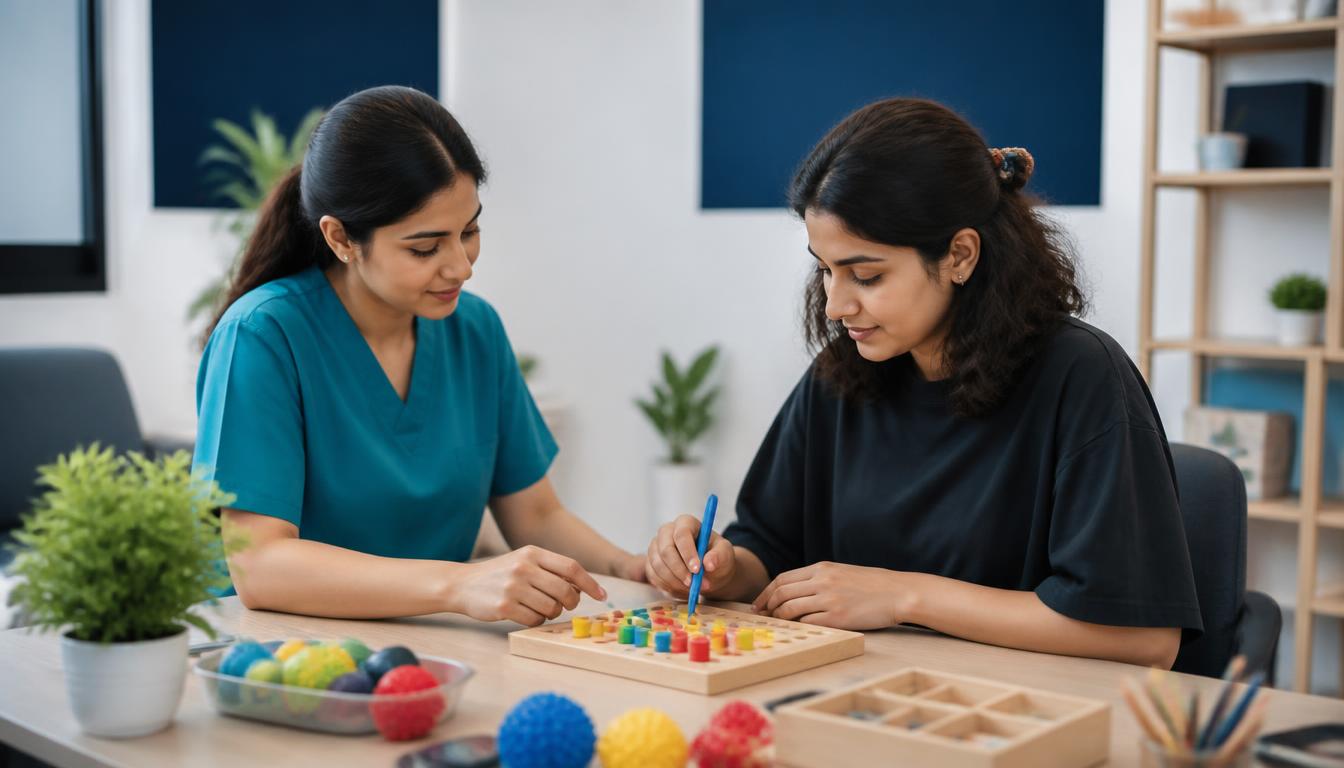
Occupational Therapy (OT) helps people across the lifespan to do the things they want and need to do, through the therapeutic use of daily activities. In our psychiatric and rehabilitation setting, OT focuses on enabling people with physical, cognitive or psychiatric conditions to develop, recover, or maintain the skills needed for daily living and working. For children, 'occupations' include learning, playing and socialising. For adults, it includes work, self-care and community participation.
Signs you may need this service
- Difficulty with daily tasks like dressing, eating or personal hygiene.
- In children — struggles with fine motor (holding a pencil) or gross motor skills.
- Extreme sensitivity or under-reactivity to sounds, textures or lights.
- Challenges with memory, organisation or problem-solving in daily routines.
- Loss of functional independence following illness or injury.
Who can benefit?
- Children with developmental delays, autism or ADHD needing sensory integration.
- Adults recovering from strokes or traumatic brain injuries.
- Individuals with severe psychiatric conditions needing help with daily living skills.
- Patients needing rehabilitation to return to work or independent living.
How this service helps
We focus on functionality and independence. Breaking complex activities into manageable steps helps patients reclaim control over daily life.
Key benefits
Evidence-based approaches
Sensory Integration Therapy
A specialised approach, often used for children with autism, to help the brain process and organise sensory information.
Activities of Daily Living (ADL) Training
Practical training in self-care tasks — hygiene, dressing, feeding — for day-to-day independence.
Cognitive Rehabilitation
Exercises to improve memory, attention and executive function after neurological or severe psychiatric conditions.
What happens during consultation
A structured yet empathetic approach to ensure the best care.
Functional Assessment
Evaluating the patient's physical, cognitive and sensory abilities in relation to daily activities.
Goal Formulation
Setting realistic, patient-centred goals focused on specific skills.
Therapeutic Intervention
Structured, purposeful activities designed to build skills or adapt to limitations.
Environmental Adaptation
Recommending changes to home, school or work environment to support independence.
Frequently asked questions
Common questions our patients ask before starting this service.
Related conditions
Related services
Ready to begin your journey?
Taking the first step is often the hardest. Our team is here to support you with confidentiality and compassion.
Book consultation via WhatsApp